|
 The Horn of Africa Course 2010
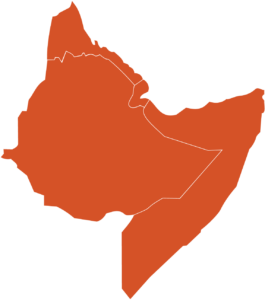
The Horn of Africa Course will be held from Saturday 29 May to Friday 4 June in Lamu, Kenya. The Course is an intensive one-week residential event covering Ethiopia, Eritrea, Djibouti, Somalia, Somaliland, Puntland, and northern Kenya. The Course Director is Mark Bradbury, author of Becoming Somaliland. The Director of Studies is Ken Menkhaus, Professor of Political Science at Davidson College, North Carolina. The teaching staff this year includes: Dekha Ibrahim, a leading Kenyan civil society activist and winner of the Right Livelihood Award (2007); Jabril Ibrahim Abdulle, Director of the Centre for Research and Dialogue in Mogadishu; Kjetil Tronvoll, Professor of Human Rights and Peace and Conflict Studies at the University of Oslo; Tobias Hagmann, Lecturer in Geography at the University of Zurich. There are many opportunities for informal discussion with the teaching staff and other participant. For prospectuses and application forms please write to the Horn of Africa Course Administrator.
 Sudan Course 2010
The seventh Sudan Course will be held from Saturday 12 June to Friday 18 June in Rumbek, Southern Sudan. The Course covers all areas of Sudan. The Director of the Sudan Course is Dr Eddie Thomas, author of the recent Chatham House report on Sudan, Deadlines and Decisions. The Director of Studies is Dr Cherry Leonardi, Lecturer in History at Durham University and a specialist in local and traditional authority in Sudan.The teaching staff this year includes the following:Jok Madut Jok, author of Race, Religion and Violence in Sudan; Akolda Tier, Professor of Law at the University of Khartoum and member of the National Elections Commission; Hon Mrs Adak Costa, member of the Lakes State Assembly and former member of the Women and the Law project of the South Sudan Law Society; Omer Egemi, Professor of Geography at the University of Khartoum; Douglas Johnson, author of The Root Causes of Sudan's Civil Wars; John Ryle, Chair of the Rift Valley Institute and Professor of Anthropology at Bard College, New York. For prospectuses and application forms please write to the Sudan Course Administrator.
 Sudan Course 2009
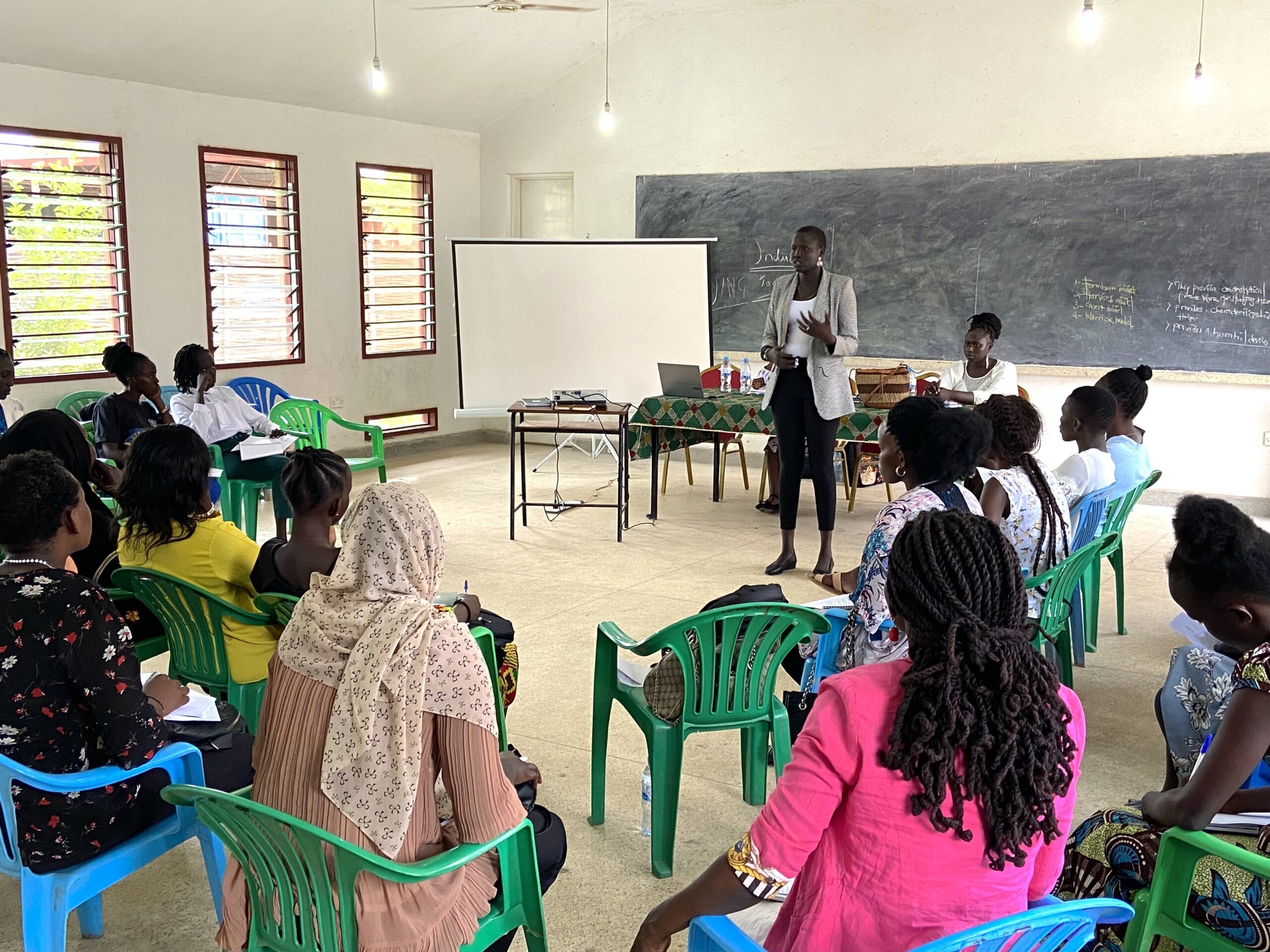
The sixth RVI Sudan Course was held in Rumbek Senior Secondary School from 24 to 30 May 2009. The directors of the course were Eddie Thomas and Cherry Leonardi. New teaching staff this year included Akolda Tier, Omer Egemi, Mom Arou, Jago Salmon and Samia el-Nagar. Staff and students participated in classes with students from the school. There were guided tours of the town and a visit to the cattle-auction in Rumbek market. The Governor of Lakes State, HE Daniel Awet Akot, was guest of honour at the final dinner. An RVI football team narrowly lost in a spirited match with Rumbek town.
 Horn of Africa Course 2009
The second RVI Horn of Africa Course took place from 20 to 26 June 2009 in Lamu, Kenya. The Course was directed by Mark Bradbury and Ken Menkhaus. New teaching staff this year included Tobias Hagmann, Haroon Yusuf, Jason Mosely, Hussein Mahmoud, Sada Mire, Kjetil Tronvoll, Amina Soud and Nisar Majid. Lectures were held in Lamu Old Town; course participants stayed mainly in private residences on the island. There was a historical tour of the town, a trip by racing dhow to explore archaeological remains on Takwa Island, and a final reception at Lamu Fort.
 Sudan Course 2008
The fifth Sudan Course took place at Rumbek Senior Secondary School in June 2008 under the direction of Justin Willis and John Ryle. The course is taught by a team of noted Sudanese academics and activists and international specialists. This year the teaching staff included Roland Marchal, Douglas Johnson, Magdi al Na'im, Joanna Oyediran, Jok Madut Jok, Samia Ahmed, Osman Mohamed Osman, Philip Winter, Sara Pantuliano, Dan Large and Cherry Leonardi. There were guided visits to the Rumbek cattle-auction and to the nineteenth-century slave-traders' fort on the outskirts of the town. An RVI soccer team lost to the Rumbek town team in front of a large crowd in Freedom Square
 Horn of Africa Course 2008
The first RVI Course Horn of Africa took place 11-17 October in Djibouti. The course is a high-level, intensive programme covering Ethiopia, Eritrea, Djibouti, Somalia, Somaliland and Puntland, directed by Mark Bradbury and Ken Menkhaus. The syllabus spans the history, culture, economics and politics of the region, from cave paintings and khat to national elections and international interventions. The teaching faculty is composed of Ethiopian and Somali scholars, civil society activists and international specialists. This year's staff included: historians Bahru Zewde, Ezekiel Gebissa and Lee Cassanelli; political scientist Terrence Lyons; anthropologist Marcel Djama; livelihood specialists Jane Macaskill and Patta Scott-Villiers; civil society activists Ahmed Esa, Dekha Ibrahim and Jabril Ibrahim Abdulle; and political analysts Sally Healy and Cedric Barnes.
 Sudan Course 2007
The fourth Sudan Field Course took place in May 2007 in Rumbek, South Sudan. The teaching staff included Douglas Johnson, author of The Root Causes of Sudan's Civil Wars, Suliman Baldo of the International Center for Transitional Justice, Jok Madut Jok, author of Race, Religion and Violence in Sudan, Hala Elkarib of the Khartoum-based SIHA (Strategic Initiative for Women in the Horn of Africa), Khalid Medani of McGill University, Joanna Oyediran of UNMIS (the UN Mission in Sudan) and Gérard Prunier, author of Darfur: The Ambiguous Genocide.
The Course was held in collaboration with Rumbek Senior Secondary School. Participants included international and Sudanese staff from UNMIS and other UN agencies, NGO personnel, academic researchers, and government officials from the UK, Norway and South Africa. There were guided field visits to the cattle market, to the remains of the Rumbek zariba (Pan Dit, a fortified settlement built by nineteenth-century slave-traders) and to a Dinka religious shrine north of the town. The final dinner of the course was attended by Mr Gordon Maker Abol, Lakes State Minister of Education, Science and Technology. The RVI basketball team lost for the third year running against Rumbek Town.
 Sudan Course 2006
The third annual RVI Sudan course took place in Rumbek, South Sudan from 7th to 12th May 2006. As in previous years, the course provided an intensive introduction to north and south Sudan, covering modern history, politics and administration, civil war, ethnography, economics, human rights, and natural resources.
The course was organized in collaboration with Rumbek Senior Secondary School, where the RVI has connections from before the civil war. Following last year's course a photovoltaic lighting system for the school science laboratory was installed; this year, with the support of the UK foundation Small Voice, we built a new latrine block.
Classes were held at the school; evening sessions at the Afex camp near Rumbek airstrip, where participants stayed during the course. Other activities included field visits to Rumbek cattle market and to a Dinka religious shrine outside Rumbek, at War Nyang. The RVI basketball team once more suffered a defeat against Rumbek Town, playing in front of an enthusiastic crowd in the main town square.
The course was attended by thirty-four students. They included international and Sudanese staff of UNMIS (the UN Mission in Sudan) and participants from a range of other organizations, including the UK and Swiss Governments, the Sudan Social Development Organization (SUDO), USAID, Oxfam (GB), Georgetown University, the Total Oil Company and the Japan International Cooperation Agency.
Among the teaching staff were Douglas Johnson, author of The Root Causes of Sudan's Civil Wars, Paul Wani Gore and Munzoul Assal of Khartoum University, Eisei Kurimoto of Osaka University and Jemera Rone of Human Rights Watch. Also Gérard Prunier, author of Darfur: The Ambiguous Genocide, Michael Kevane of Santa Clara University, Philip Winter, Director of the Mpala Wildlife Foundation, John Ryle, Chair of the RVI, and Rogaia Abusharaf, author of Wanderings: Sudanese Migrants and Exiles in North America.
The Course Director was Dr Justin Willis of Durham University (now Director of the British Institute in Eastern Africa). The Deputy Director was Dan Large (also Director of the RVI's digital library, the Sudan Open Archive.) The Course Coordinator was Toby Fenwick-Wilson.
Visiting speakers included Karak Mayik Nyok, executive director of the Sudanese non-governmental organization, the Friendship Agency for Community Training (FACT). Highlights of the video programme were the first showing in Sudan of Richard Trayler-Smith's Black Pharaohs, a BBC documentary about archaeological excavations in the flood area of the controversial new dam at Merowe, and a showing of ethnographic documentaries about Rumbek to students at the Senior Secondary School.
The final dinner of the Course was addressed by the Deputy Governor of Lakes state, HE Lt-Col David Nok Marial, and attended by the State Minister of Information, Culture, Youth and Sport, Ms Adak Costa Mapuor.
 Sudan Course 2005
The second Rift Valley Institute Sudan Course was held in July 2005 in Rumbek (then the administrative centre of the new government of South Sudan). The course took place at Rumbek Senior Secondary School, the first international event to be held there since before the civil war.
The teaching staff on the 2005 course consisted of international Sudan specialists including Justin Willis (the Director of the course), Gérard Prunier, Atta al-Battahani, Jok Madut Jok, Philip Winter, John Ryle Khalid Medani, Jemera Rone, Suzanne Jambo and Eisei Kurimoto. Among the students were senior aid workers, diplomatic staff and academic researchers from Africa, Europe and the Americas. Visiting speakers included Paul Macuei, former Governor of Rumbek, Acuil Malith Banggol, director of Supraid (and organizer of the annual Twic Olympics), Ben Parker of UNICEF and Captain Louis Lepage of UNMIS, the UN Mission in Sudan.
Highlights of the course included a visit to War Nyang, a shrine of the Dinka religion near Rumbek, and the first showings in Sudan of two documentary films: The Man Who Could Be King, directed by Nancy Ing-Duclos and Edith Champagne, and Taghreed el Sanhouri's All About Darfur. Another film, The Price of Survival by John Ryle and Bapiny Tim Chol, was shown at Rumbek Senior Secondary to an audience of students from the School.
There was a basketball match in Freedom Square, Rumbek, between the Rift Valley Course team and Rumbek town. The trophy went to the home team. Dheng nhial, the Agar Dinka dance; basketball match in town square, Rumbek 2005
 Sudan Course 2004 ("The Threshold of Peace")
The first RVI Sudan Course was held in April 2004 in Kenya at a game ranch on the Athi Plains, outside Nairobi. Participants were housed in a field centre on the ranch and a tented safari camp nearby. Twenty-five students from sixteen organizations and a dozen nationalities attended. There were ten academic staff and half-a-dozen guest speakers.
Speakers examined the historical formation of the Sudanese state, the causes of the civil war in the South and the current role of outside agencies in economic and social development. Teaching was by means of lectures, panel discussions, special presentations and reviews by students of each day's teaching.
The first day dealt with the physical environment of Sudan: the country's natural resources and communications and the modes of livelihood and patterns of settlement of the human population: riverain communities in the north, savannah dwellers in the West and South and cultivators of the southern woodlands. The teaching was led by the Deputy Course Director, Abdelwahab Sinnary, assisted by Dr Malte Sommerlatte, formerly head of the Wildlife Unit at the University of Juba. The other speakers were George Echom of the Sudan Peace Fund and Philip Winter, former South Sudan Field Director of Save The Children Fund. There were game walks and game drives on the ranch led by Dr Sinnary, George Echom and Philip Winter.
The second day of the course was dedicated to the ethnography of Sudan. Speakers examined the work of anthropologists in the region, the role of kinship among different social groups, the changing nature of ethnicity and the legacy of indigenous political systems. Dr Wendy James, Professor of Social Anthropology at the University of Oxford, led the teaching, with the assistance of Dr Peter Adwok Nyaba, Muna Khogali and John Ryle, the director of the course.
The subject of the third day was state formation and decay, from the nineteenth century to the present day. Students were introduced to the political history of Sudan through four interwoven themes: the ambitions of the central state; the nature of local authority; the role of religion; and the relationship between the state and the practice of violence. Dr Justin Willis led with a panoptic view of the rise of riverain states: the process of Islamization and Arabization, imperial rule, independence and civil war. Dr Suliman Ali Baldo and Dr Douglas Johnson and Cherry Leonardi made presentations on specific aspects of state formation and development. There was a panel on human rights with Jemera Rone of Human Rights Watch and Diane de Guzman of the Civilian Protection Monitoring Team.
The final day of the course, "A Fantastic Invasion", considered the global dimension of Sudanese economic and political history and Sudan's experience with international aid and development programmes. Speakers reviewed the imperial legacy of development planning and more recent developments in mechanised farming, the use of displaced and captive labour, and the impact of oil. Dr Douglas Johnson, author of The Root Causes of Sudan's Civil Wars, led the day. Other speakers included Dr Suliman Ali Baldo, Kristina Belknap of the Lulu Livelihoods Project and Dan Large of the School of Oriental and African Studies. Participants were briefed on the state of the peace negotiations at Naivasha by David Mozersky of the International Crisis Group.
Evening sessions of the course featured a number of visiting speakers and video presentations. Allan Reed, the recently appointed head of the USAID office for South Sudan, showed a film he made in the early 1970s, in the last years of the first civil war, travelling through South Sudan with Anyanya guerillas. Other visiting speakers included Nhial Bol, the Editor-in-Chief of the Khartoum Monitor, and Acuil Malith, director of the South Sudanese NGO, Supraid.
The final dinner was attended by HE Dirdeiry Mohammed Ahmed, Deputy Ambassador of Sudan to Kenya. Other guests included: David Hopcraft, owner of the game ranch where the course was held; Paul Lane, then Director of the British Institute in Eastern Africa; Neil Turner, Regional Coordinator of Save the Children Fund (UK); Paul Murphy of the Sudan Peace Fund (Pact); and Michael Chege, a Rift Valley Institute Fellow and Director of the Center of African Studies at the University of Florida, currently seconded by UNDP to the Kenyan Ministry of Planning.
|
ON THIS PAGE | • | The Horn of Africa Course 2010 | | • | Sudan Course 2010 | | • | Sudan Course 2009 | | • | Horn of Africa Course 2009 | | • | Sudan Course 2008 | | • | Horn of Africa Course 2008 | | • | Sudan Course 2007 | | • | Sudan Course 2006 | | • | Sudan Course 2005 | | • | Sudan Course 2004 ("The Threshold of Peace") |
|